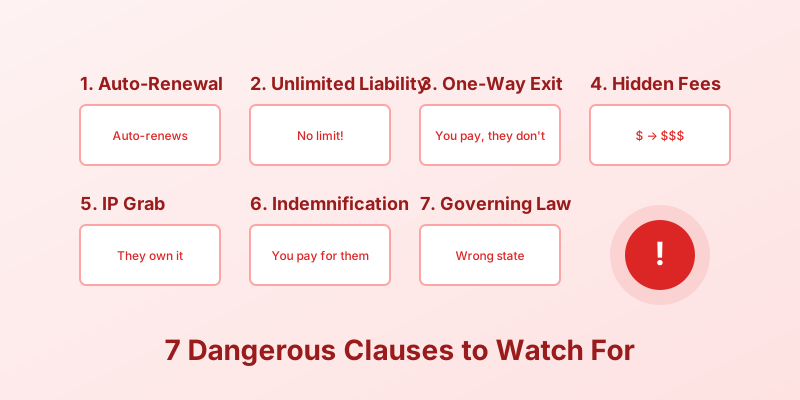
7 Contract Clauses That Could Cost You Thousands (And How to Spot Them)
The Contract Trap Most People Never See
Here's something the contract industry doesn't want you to know: the most dangerous clauses are the ones you don't notice.
They don't jump out at you. They hide in paragraphs of dense text, sandwiched between reasonable-sounding terms. By the time you realize what you've agreed to, it's too late.
I've reviewed thousands of contracts over the years, and certain clauses appear again and again—usually benefiting one party far more than the other. Today, I'm pulling back the curtain on the most costly ones.
According to a Consumer Financial Protection Bureau report, Americans lose billions of dollars annually due to unfair contract terms they didn't understand or notice. The Federal Trade Commission has taken action against numerous companies for deceptive contract practices.
The 7 Most Dangerous Contract Clauses
1. The Silent Auto-Renewal
What it looks like:
"This Agreement shall automatically renew for successive periods of twelve (12) months unless either party provides written notice of non-renewal at least thirty (30) days prior to the expiration of the then-current term."
Why it's dangerous:
This is perhaps the most common trap in modern contracts. You sign up for a "free trial" or annual subscription, and unless you remember to cancel 30 days before renewal, you're automatically charged for another year.
Real impact:
Statistics: According to FTC data, consumers lose an estimated $1.4 billion annually to negative option and automatic renewal scams.
How to spot it:
Search for "renew," "automatic," and "termination" in your document. If you see automatic renewal paired with a short cancellation window, that's your red flag.
2. The Unlimited Liability Bomb
What it looks like:
"The Service Provider shall not be liable for any indirect, incidental, special, consequential, or punitive damages. IN NO EVENT SHALL THE SERVICE PROVIDER'S TOTAL LIABILITY EXCEED THE AMOUNTS PAID BY CLIENT IN THE TWELVE (12) MONTHS PRECEDING THE CLAIM."
Wait, that actually looks reasonable—there's a cap.
But watch for the version WITHOUT the cap:
"The Service Provider's liability shall not be limited under any circumstances."
Why it's dangerous:
Without a cap, a single mistake by the other party could leave you responsible for limitless damages. A software bug that crashes your system, a consultant's bad advice that costs you a major client—suddenly you're on the hook for everything.
Legal context: The American Bar Association recommends that liability caps be clearly defined and reasonable for both parties.
3. The One-Way Exit
What it looks like:
"Either party may terminate this Agreement at any time, with or without cause, upon thirty (30) days written notice."
Sounds fair, right? Both sides can leave.
But read further:
"Upon termination by Client, Client shall pay all outstanding fees through the remainder of the contract term."
Why it's dangerous:
They can walk away anytime. You can too—but you'll still pay. This creates an asymmetric relationship where they have flexibility and you have obligations.
4. The Hidden Fee Accumulator
What it looks like:
"Additional services not included in the scope of work shall be billed at the Provider's standard rates."
Seems reasonable on the surface.
But what's "standard rates"? And what counts as "additional services"? Without specifics, this clause lets one party unilaterally decide you've gone beyond the original scope and start charging.
Why it's dangerous:
Projects that should cost $5,000 suddenly become $15,000 because the other party decided to add "minor adjustments" that weren't in the original scope.
5. The IP Ownership Grab
What it looks like:
"All work product, inventions, discoveries, and materials created during the term of this Agreement shall be the sole and exclusive property of the Service Provider."
Why it's dangerous:
If you're paying someone to create something for you—design work, written content, software—without clear IP ownership terms, you might not actually own what you've paid for.
This happens constantly with:
Legal reference: According to the U.S. Copyright Office, ownership of creative works must be explicitly transferred in writing. Learn more about intellectual property rights from the U.S. Patent and Trademark Office.
6. The Broad Indemnification Clause
What it looks like:
"Client agrees to indemnify, defend, and hold harmless Service Provider from any and all claims, damages, losses, and expenses arising from Client's use of the services."
Why it's dangerous:
This means if anyone sues them for something related to your use of their product—even if it's not their fault—you have to pay for their defense.
A client gets hurt using your product? They might try to sue the software provider. Without protection, you could be on the hook for their legal fees.
7. The Ambiguous Governing Law
What it looks like:
"This Agreement shall be governed by the laws of the State of Delaware."
Why it's dangerous:
If you're in California and they're in New York, and the contract says Delaware law applies, you're agreeing to:
For individuals and small businesses, this can make enforcing your rights practically impossible. The Legal Information Institute provides resources on understanding jurisdiction and governing law clauses.
Quick Reference: Dangerous Clause Checklist
| Clause Type | Search Terms | Risk Level | Common In |
|---|---|---|---|
| Auto-Renewal | "renew", "automatic", "cancel" | High | Subscriptions, memberships |
| Unlimited Liability | "liability", "damages", "limit" | Critical | Service contracts, consulting |
| One-Way Exit | "terminate", "notice", "fees" | High | Long-term contracts |
| Hidden Fees | "additional", "standard rates", "extra" | Medium | Project-based work |
| IP Grab | "ownership", "intellectual property", "work product" | High | Creative services, development |
| Broad Indemnification | "indemnify", "hold harmless", "defend" | High | Service agreements |
| Governing Law | "govern", "jurisdiction", "venue" | Medium | All contracts |
How to Protect Yourself
Now that you know what to look for, here's your defense strategy:
Need tips on reading long contracts quickly? Check out our guide: What to Do When the Contract Is 50+ Pages (Without Reading Every Word). Want to learn how to read contracts efficiently? Read our practical guide to reading contracts.
Frequently Asked Questions
What is the most dangerous contract clause?
The most dangerous clause varies by situation, but unlimited liability clauses are generally the most financially devastating. They can expose you to unlimited financial responsibility with no cap.
Are auto-renewal clauses legal?
Yes, auto-renewal clauses are generally legal, but the FTC's Negative Option Rule requires companies to clearly disclose these terms and provide easy cancellation methods.
Can I negotiate contract clauses?
Absolutely. Most contracts are negotiable, especially in B2B relationships. Always ask to modify unfair terms before signing. Read our guide on how to read contracts for negotiation tips.
What should I do if I already signed a bad contract?
Consult a lawyer immediately. Some clauses may be unenforceable, and you may have options for termination or modification. Time limits often apply, so act quickly.
How can I spot hidden fees in contracts?
Look for vague language like "standard rates," "additional services," or "reasonable fees." Always ask for a specific fee schedule before signing.
The Bottom Line
Knowledge is your best defense. These clauses exist because they work—most people never read them, and even fewer understand what they're agreeing to.
You don't need to become a lawyer. You just need to know what to look for and have the courage to ask questions before you sign.
The best time to negotiate is before you commit. Once you sign, your leverage disappears.
This article was reviewed by legal professionals and references guidelines from the Federal Trade Commission and American Bar Association. Last updated: March 2026.
Disclaimer: This guide is for educational purposes only and does not constitute legal advice. For specific legal questions, please consult a qualified attorney.