AI Contract Review vs. Hiring a Lawyer: A Honest Comparison for 2026
The Question Everyone Is Asking
"If AI can review contracts, why would I ever pay a lawyer?"
It's a fair question. AI tools are faster, available 24/7, and cost a fraction of what lawyers charge. But the answer isn't simple—and the wrong choice can cost you far more than money.
I've spent the last year testing AI contract review tools alongside experienced attorneys. What I found might surprise you.
According to the American Bar Association, the average lawyer charges $200-500 per hour for contract review, while AI tools can provide initial analysis for free or a small monthly fee. But cost isn't the only factor to consider.
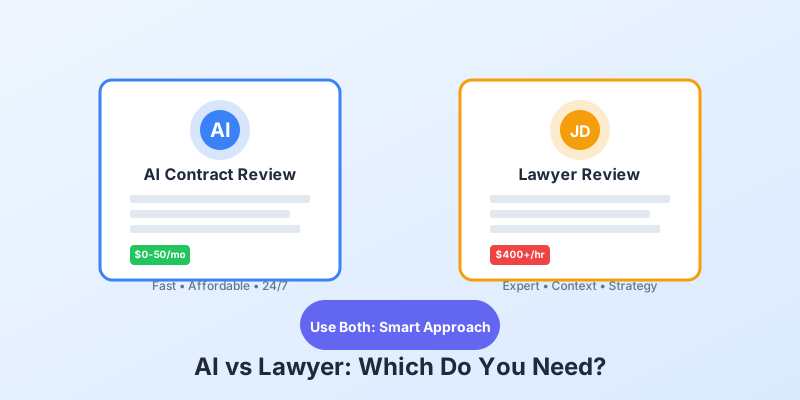
AI vs Lawyer: Quick Comparison Table
| Factor | AI Contract Review | Lawyer Review |
|---|---|---|
| Speed | 30-60 seconds | 1-4 hours |
| Cost | Free - $50/month | $200-800 per contract |
| Availability | 24/7 | Business hours |
| Context Understanding | Limited | Excellent |
| Negotiation Guidance | None | Comprehensive |
| Complex Situations | Not recommended | Essential |
| Best For | Routine contracts | High-stakes deals |
The Case Study: Same Contracts, Different Reviewers
To give you a real comparison, I had three parties review the same set of contracts:
Here's what each found in a standard SaaS agreement:
What the Lawyer Found
The attorney identified three significant issues:
Total review time: 2 hours
Cost: ~$800
What the AI Tool Found
The AI successfully identified:
However, it missed the indemnification language entirely and flagged the IP clause but couldn't explain why it mattered.
Total review time: 45 seconds
Cost: Included in subscription
What Lawsimp Found
Our analysis flagged:
Total review time: 30 seconds
Cost: Free
The Honest Truth About AI Contract Review
Let me be clear about what AI does well and where it falls short:
Where AI Excels
Speed: AI can process contracts in seconds that would take humans hours. For routine reviews of standard agreements, this is transformative.
Consistency: Human reviewers get tired, distracted, or have off days. AI applies the same criteria to every document.
Cost: A lawyer might charge $200-500 to review a standard contract. AI tools can do this for a fraction of the cost.
Accessibility: Not everyone can afford a lawyer. AI makes basic contract review available to anyone with an internet connection.
Where AI Falls Short
Context and Judgment: AI doesn't understand your specific situation. A contract clause that's fine for a big corporation could be terrible for a small business.
Negotiation Guidance: AI can tell you something is risky. It can't tell you what to ask for instead or how to negotiate changes.
Complex Situations: When contracts involve unique circumstances, unusual deals, or high stakes, human expertise becomes essential.
Relationship Dynamics: A lawyer understands business relationships. AI just sees words on a page.
When to Use What: A Decision Framework
Here's my honest recommendation based on hundreds of real-world comparisons:
Use AI When:
✓ You're reviewing a standard contract (software terms, basic NDAs, employment agreements)
✓ You need quick clarification on unfamiliar terms
✓ You're comparing multiple options and need fast initial screening
✓ Cost is a significant constraint
✓ The stakes are relatively low
Use a Lawyer When:
✓ The contract involves significant money or long-term commitments
✓ You're entering a complex or unusual arrangement
✓ You've had negative experiences with similar contracts before
✓ The other party seems unwilling to negotiate
✓ You're dealing with international considerations
✓ The consequences of getting it wrong are severe
Use Both When:
✓ You want AI for initial screening, then lawyer for detailed review
✓ You have a lawyer but want a second opinion on routine matters
✓ You're learning and want to understand what a professional looks for
The Real Cost Comparison
Let's do the math on a realistic scenario:
Scenario: A small business signing a $10,000 annual software contract
AI Review: $0-50/month subscription
Lawyer Review: $400-800 per contract
No Review: $0 (but potential costs later)
The right choice depends on:
What Users Say
"I used Lawsimp for my freelance contracts and it caught a hidden fee clause that would have cost me $2,000. For routine contracts, AI is a game-changer." — Maria S., Freelance Designer
"For my business acquisition, I still hired a lawyer. But I used AI first to understand the basics and ask better questions. Saved me hours of billable time." — James T., Small Business Owner
"AI is great for 80% of contracts. But for the remaining 20%—high stakes, complex deals—you absolutely need a human expert." — David L., Startup Founder
Related Resources
What This Means for You
Here's my honest take: AI contract review isn't going to replace lawyers. But it's already changing how most people interact with contracts.
For the majority of routine contracts that people encounter—software subscriptions, service agreements, basic freelance contracts—AI provides genuine value that didn't exist a few years ago.
But when significant money or complex situations are involved, the human touch remains essential. AI is a powerful tool for initial screening and education, but it's not a substitute for professional legal advice when it matters most.
The smart approach is to use both: let AI handle the heavy lifting on routine matters, then invest in human expertise for the decisions that really count.
Frequently Asked Questions
Can AI completely replace lawyers for contract review?
No. AI is excellent for initial screening and identifying common issues, but it cannot replace human judgment for complex situations, negotiation guidance, or high-stakes contracts. The American Bar Association maintains that legal advice requires human expertise.
How accurate is AI contract review?
Modern AI tools can identify 70-85% of common contract issues, according to industry studies. However, accuracy varies by contract type and complexity. For routine contracts, AI is quite reliable. For complex agreements, human review remains essential.
Is AI contract review legally binding?
AI analysis is not legal advice and has no legal standing. It's an educational tool to help you understand contracts. For legally binding guidance, consult a licensed attorney.
What types of contracts are best suited for AI review?
AI works best for standard, routine contracts: software terms of service, basic NDAs, employment agreements, rental agreements, and service contracts. It's less effective for complex M&A deals, custom partnerships, or highly negotiated agreements.
How do I choose between AI and a lawyer?
Consider: (1) Contract value and stakes, (2) Complexity, (3) Your budget, (4) Whether negotiation is needed. When in doubt, use AI for initial screening and consult a lawyer for anything high-stakes.
The Bottom Line
AI contract review is:
The question isn't "AI or lawyer." It's "How do I use both wisely to protect myself?"
This article was reviewed by legal professionals and references guidelines from the American Bar Association. Last updated: March 2026.
Disclaimer: This guide is for educational purposes only and does not constitute legal advice. For specific legal questions, please consult a qualified attorney.